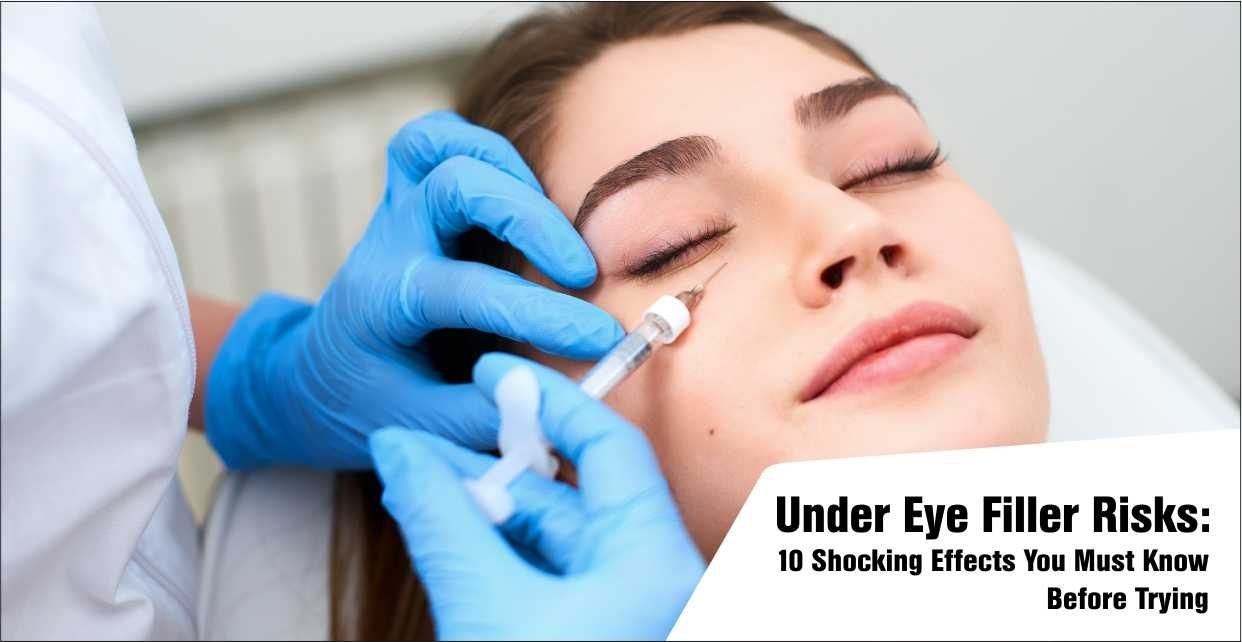
Do dark circles and under-eye hollows make you look tired even after a full night’s sleep? Many people consider under-eye fillers as a quick fix for a refreshed look. With social media filled with before-and-after transformations, it’s tempting to believe that under-eye fillers are a magic solution. But are they safe?
While fillers can provide temporary improvement, they come with complications that should not be ignored. If you are considering getting under-eye fillers, it is essential to understand the possible side effects before making a decision.
Here are ten shocking effects that you must be aware of before opting for this cosmetic procedure.
One of the most common side effects of under-eye fillers is swelling and bruising. Since the under-eye skin is delicate, the injection process can cause minor trauma to the blood vessels, leading to bruising. Swelling may last for a few days, and in some cases, it can persist for weeks. Patients using blood-thinning medications or those with sensitive skin are more likely to experience these effects.
Improper injection technique or excessive filler placement can result in lumps or uneven texture under the eyes. The area might appear bumpy or swollen, creating an unnatural look. While some cases resolve on their own, others may require corrective procedures such as massage or dissolving the filler using hyaluronidase.
A poorly injected filler can lead to a bluish discoloration known as the Tyndall effect. This occurs when the filler is placed too superficially under the thin skin, causing light to scatter in a way that creates a blue or grayish appearance. This can be quite noticeable and may require corrective treatment.
Any injection carries a risk of infection, and under-eye fillers are no exception. If the procedure is not done in a sterile environment or by an experienced professional, bacteria can enter the injection site, leading to redness, swelling, and even abscess formation. Additionally, some patients may develop allergic reactions to the filler material, leading to itching, rashes, or severe inflammation.
While most dermal fillers contain lidocaine to minimize pain, some patients still experience discomfort during and after the procedure. The under-eye area is highly sensitive, and injections can cause temporary tenderness. In some cases, persistent pain may indicate an underlying issue such as nerve irritation or improper filler placement.
Over time, fillers can shift from their original position, leading to puffiness or unnatural bulging in the under-eye region. This occurs when the filler moves due to gravity, muscle movement, or poor placement. Correcting migrated fillers may require dissolving the product and re-injecting it properly.
One of the most serious under eye fillers is the possibility of vascular occlusion. If the filler is accidentally injected into a blood vessel, it can block blood flow and cause severe complications, including skin necrosis (tissue death) and even blindness. Although rare, these risks highlight the importance of choosing a highly skilled medical professional for the procedure.
Some patients experience prolonged puffiness or under-eye bags after getting fillers. This can happen when the filler attracts water (hyaluronic acid-based fillers are hydrophilic), leading to an overly swollen appearance. In some cases, this effect may persist for months, requiring corrective treatment.
In some individuals, small lumps or nodules can develop weeks or even months after the procedure. These may be caused by an immune response to the filler material, resulting in granuloma formation. Treatment may involve steroid injections or dissolving the filler.
When too much filler is used or if it is injected incorrectly, the under-eye area can look puffy, unnatural, or even worse than before. Overfilled under-eyes can create a “pillow face” effect, making a person appear older rather than younger. This issue often requires correction, which may involve dissolving the excess filler and re-evaluating the treatment approach.
While fillers can work well for some, they are not suitable for everyone. You should avoid under-eye fillers if:
Under-eye fillers, also known as non-surgical fillers, are favored to fill the hollowness, dark circles, and the ill appearance of the eyes. Knowing how every step of the procedure works for the creation of realistic expectations, increasing the level of safety, and improving the outcomes.
It starts with an elaborate consultation process. Your provider will examine the anatomy of the under-eyes, the thickness of the skin, the loss of volume, and how hollows or shadows form. Not all people are good candidates; patients with bulky bags under their eyes, with serious pigmentation, or with substantial skin laxity might need another treatment.
The patients usually pose such a question at this point, Is under-eye filler safe? The procedure is safe when administered by an experienced, qualified injector, with the help of proper fillers of hyaluronic acid. An extensive medical history is conducted to exclude bleeding disorders, autoimmune diseases, or active infections.
The patients are usually advised to stop taking blood-thinning medications, alcohol, and some supplements several days before treatment to reduce the possibility of bruising and swelling. There are also clear expectations about the results and limitations that are discussed.
The therapy lasts 20-40 minutes. To make it comfortable, one can use a numbing cream. Depending on technique and anatomy, an injector can be a fine needle or a blunt-tipped cannula.
Filler is inserted in small dots and at the right place of the anatomical plane to create volume and make the tear trough look smooth. It is a conservative method because the area under the eyes is sensitive, and it tends to overfill. A majority of the patients report a mild type of pressure and not pain during injection.
The improvement in the short term may be observable, but final outcomes may be obscured in the short term by swelling.
Mild swelling, redness, or bruising occurs after the procedure and may go away after a few days. Swelling can be reduced by the use of a cold compress and sleeping with the head raised. Patients have been encouraged to keep off vigorous exercise, overheating, alcohol, and sneezing into the eyes for a period of 24-48 hours.
The settling of the filler takes one to two weeks to give final results. When properly applied, the consequences look natural, fresh, and balanced instead of inflated or excessive.
In most cases, under eye fillers side effects long term are questioned by the patients. Although there are not many serious complications, long-term problems like filler migration, swelling, lumps, or discoloration may occur in case of inappropriate technique or choice of the product. The hyaluronic acid fillers have an added safety benefit of being dissolvable in case of need.
Consistent follow-ups with the provider will assist in the monitoring of the results and correction of the concerns at the initial stages. The maintenance treatments are generally required once in 9-18 months, depending on the filler and personal metabolism.
If you still want to proceed with under eye fillers, follow these precautions to minimize risks:
If you are hesitant about getting fillers, there are other options to improve the under-eye appearance:
Under-eye fillers can provide quick results, but they are not without risks. Many patients regret getting fillers due to complications like swelling, lumps, and unnatural appearances. Before going ahead with the procedure, consult a trained medical professional who can assess whether fillers are the right choice for you.
If you are concerned about under-eye hollowness or dark circles and are looking for expert guidance, visit Skipper Eye-Q International Eye Hospitals. Our specialists can provide safe and effective recommendations based on your individual needs. Book an appointment today and ensure your eyes get the best care possible!



Blurry vision in one eye without pain is usually a sign of a specific problem with that eye—not fatigue or screen strain. It could indicate anything from a simple refractive change...
Read More
In developing countries, around 90% of people with glaucoma don't know they have it. Silent eye disease damages your eyes gradually through mechanisms you cannot detect, with no pain, no...
Read More
Cataracts cause the eye's natural lens to become cloudy, blurring vision and affecting daily life. During cataract surgery, the clouded lens is removed and replaced with an artificial intraocular lens...
Read More