March 16, 2026
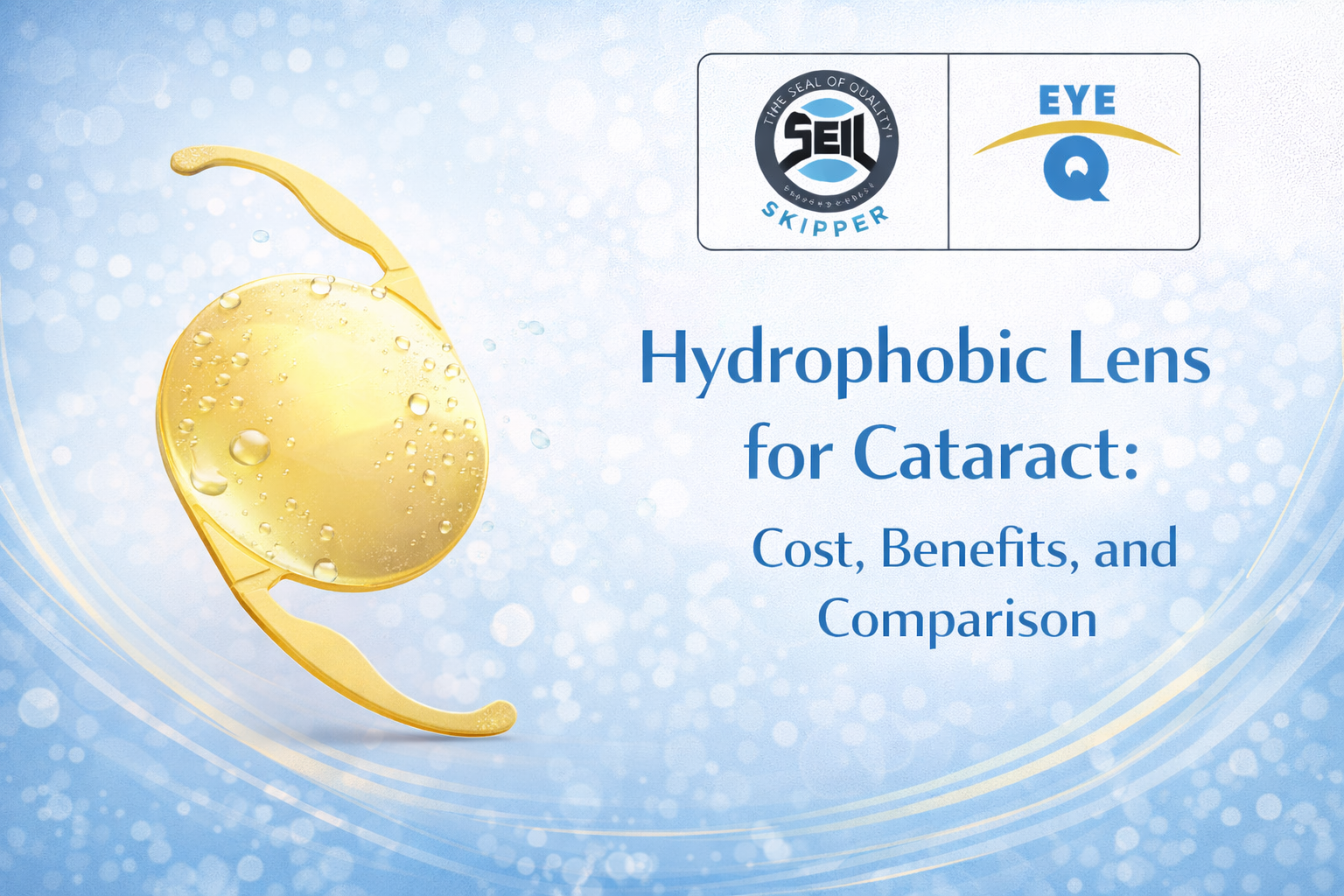
Cataracts cause the eye’s natural lens to become cloudy, blurring vision and affecting daily life. During cataract surgery, the clouded lens is removed and replaced with an artificial intraocular lens (IOL). The type of IOL chosen significantly impacts long-term vision quality and lifestyle. Hydrophobic lenses have become the preferred choice for modern cataract surgery due to superior optical clarity, durability, and long-term stability. This guide explains how they work, their benefits and limitations, costs, and whether they’re right for you.
A hydrophobic lens is an artificial intraocular lens (IOL) that replaces the clouded natural lens during cataract surgery. Made of acrylic material, these lenses repel water and resist moisture absorption, helping them maintain shape, optical clarity, and stability for decades.
Hydrophobic acrylic lenses have demonstrated good long-term optical quality in clinical studies. Research suggests they may be associated with lower rates of posterior capsule opacification (PCO), a condition where the lens capsule can become cloudy over time, compared to hydrophilic acrylic lenses. This makes hydrophobic lenses one of the most reliable, long-lasting options available.
During surgery, the surgeon removes the cloudy natural lens while leaving the lens capsule (membrane) intact. The hydrophobic IOL is folded, inserted through a tiny incision, and unfolds into the capsule where it remains permanently. The key advantage: hydrophobic material adheres strongly to the capsule, providing improved stability, reduced fluid interaction, lower PCO risk, and consistent vision quality over many years.
Optimized for distance vision (driving, TV). Reading glasses typically needed for close work.
Correct both cataracts and astigmatism (corneal irregularity), reducing glasses dependence.
Provide clear vision at multiple distances (far, intermediate, near). Most patients experience reduced glasses need, though some report glare or halos.
Offer continuous vision from distance to intermediate with fewer visual disturbances than multifocal designs.
| Feature | Hydrophobic | Hydrophilic |
| Water property | Repels water | Absorbs water |
| Long-term clarity | Excellent | Good (deposits possible) |
| PCO risk | Lower | Higher |
| Stability | Strong adhesion | Moderate |
| Durability | 20+ years | May change |
Hydrophobic lenses offer superior long-term clarity and lower complication rates, making them the gold standard for cataract surgery in most cases.
Cost typically ranges from ₦250,000 to ₦1,000,000+ per eye, depending on lens type (monofocal vs. premium), technology, facility, surgeon experience, and diagnostic testing. Insurance often covers basic monofocal surgery, but premium lenses require out-of-pocket payment.
Our experienced ophthalmologists perform advanced eye measurements (biometry, corneal mapping) to ensure precise lens selection. We discuss all lens options—monofocal, toric, multifocal, and EDOF—matched to your lifestyle and vision goals. Our proven surgical techniques minimize complications, and comprehensive post-operative care ensures optimal recovery. We offer transparent pricing and easy appointment scheduling. Your vision matters. Schedule a consultation today to discuss which hydrophobic lens is right for you.
Hydrophobic lenses represent a major advancement in cataract surgery, offering superior long-term clarity, durability, and lower complication rates. Available in multiple designs—monofocal, toric, multifocal, and EDOF—they provide options for nearly every patient. The right lens depends on your eye health, vision goals, lifestyle, and budget. A thorough consultation with an experienced ophthalmologist ensures you select the lens that will give you the best long-term visual outcomes.
Hydrophobic means water-repelling. These acrylic lenses resist moisture absorption, helping them maintain clarity and stability for decades.
These lenses are intended as permanent solutions and most patients do not require replacement. Your surgeon can discuss the expected lifespan based on your specific situation.
PCO occurs when the lens capsule becomes cloudy months or years after surgery, blurring vision. Hydrophobic lenses significantly reduce PCO risk due to superior adhesion to the capsule.
It depends on lens type. Monofocal lenses typically need reading glasses. Multifocal and EDOF lenses reduce glasses dependence significantly. Toric lenses correct astigmatism. Discuss your lifestyle with your surgeon.
They have excellent safety profiles. Some multifocal patients may experience glare or halos, especially in low light—most resolve within 2-3 months. Serious complications are rare.
For most patients seeking long-term clarity and reduced glasses dependence, yes. Premium lenses offer improved outcomes and lifestyle benefits. Discuss with your surgeon whether they align with your goals and budget.
Yes. Your surgeon may recommend different lenses for each eye based on your vision needs and eye anatomy, optimizing vision at all distances.


Have you ever noticed tiny spots or threads floating across your vision when looking at a bright sky or a plain wall? Or perhaps you've seen sudden flashes of light,...
Read More
If you're dealing with pain in your right eye along with a headache, it's most often one of a handful of familiar causes a migraine, a tension headache, a sinus...
Read More
Apollo, medically referred to as conjunctivitis occurs from inflammation of the eye's transparent membrane, known as the conjunctiva. This inflammation is triggered by infection or irritation caused by bacterial, viral,...
Read More